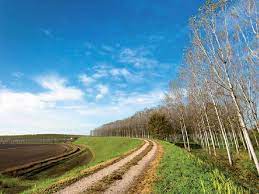
La Via Romea Imperiale
La via Romea Imperiale collega Trento a Roma, ed è una importante meta dei pellegrini. Nella bassa modenese questa via attraversa i due comuni di Concordia sulla Secchia e San Possidonio.
Storia
Il collegamento tra il mondo latino-mediterraneo e quello germanico divenne importante con l’impero romano e proseguì per tutto il medioevo per ragioni economiche, religiose e politiche. In particolare tale direttrice viaria ebbe un ruolo preminente fino al 1266, quando gli Angioini, francesi, sconfissero Corradino, l’ultimo erede del grande Federico II di Svevia. Il rapporto privilegiato tra Germania e Italia che si sviluppava su queste viabilità conobbe allora una battuta d’arresto, che durò per diversi secoli, a favore dei collegamenti con la Francia.
Lungo l’asse nord-sud transitarono interi popoli: Galli, Celti ed Etruschi, i Romani e le orde dei barbari che misero fine all’Impero Romano. Fu al centro delle vicende dei comuni e delle signorie, il rinascimento che nacque in Toscana, le battaglie del risorgimento nella pianura Padana, le due guerre mondiali. Tra i personaggi storici ricordiamo San Francesco che da Assisi arrivò a Firenze passando nel Valdarno, e Martin Lutero lungo l’Adige; Matilde di Canossa, quasi la “madrina” della nostra VIA, di cui incontriamo tracce dal Valdarno al mantovano e a San Benedetto Po, ove chiese di essere sepolta nella abbazia fondata dal nonno. Vi passarono diversi Papi e Imperatori, oltre sessanta, tra cui Enrico IV umiliato a Canossa e il Barbarossa. In foto il patrono della Via, San Bartolomeo.
In Cammino
E’ una delle Vie Romee Germaniche, Rotte Culturali Europee e si basa su antiche vie: Consolari Romane; Strade rinascimentali; settecentesche; commerciali di terra e d’acqua; devozionali (San Bartolomeo). E infine l’Asburgica via Regia, che fu voluta da Leopoldo di Lorena e Francesco d’Este per collegare Firenze a Vienna, passando da Modena.
Si incontra una pluralità di emergenze naturali, di città d’arte Patrimonio dell’Umanità Unesco, di antichi borghi. Architettura religiosa e civile, arditi ponti medievali e monumenti classici, scrigni d’arte nei musei e sacre reliquie nei santuari.Ma anche la bellezza dell’Italia contemporanea frutto della maestria produttiva del genio e della manualità italici, eccellenze enogastronomiche, Alta Moda, Motor Valley, ecc.
Per informazioni:
imperialevrg@gmail.com
politicheambientali@unioneareanord.mo.it

The connection between the Latin-Mediterranean world and the Germanic world became important with the Roman Empire and continued throughout the Middle Ages for economic, religious, and political reasons. In particular, this route played a prominent role until 1266, when the French Angevins defeated Corradino, the last heir of the great Frederick II of Swabia. The privileged relationship between Germany and Italy that had developed along these roads then came to a halt, which lasted for several centuries, in favor of connections with France.
Entire peoples traveled along the north-south axis: Gauls, Celts, and Etruscans, Romans, and the hordes of barbarians who put an end to the Roman Empire. It was at the center of the events of the communes and lordships, the Renaissance that began in Tuscany, the battles of the Risorgimento in the Po Valley, and the two world wars. Among the historical figures we remember St. Francis, who traveled from Assisi to Florence through the Valdarno, and Martin Luther along the Adige; Matilda of Canossa, almost the “godmother” of our VIA, traces of whom can be found from Valdarno to Mantua and San Benedetto Po, where she asked to be buried in the abbey founded by her grandfather. More than sixty popes and emperors passed through, including Henry IV, who was humiliated at Canossa, and Barbarossa. The photo shows the patron saint of the Via, St. Bartholomew.
It is one of the Germanic Roman Roads, European Cultural Routes, and is based on ancient roads: Roman consular roads; Renaissance roads; 18th-century roads; land and water trade routes; devotional routes (San Bartolomeo). And finally, the Habsburg Via Regia, which was commissioned by Leopold of Lorraine and Francesco d'Este to connect Florence to Vienna, passing through Modena.
There is a wealth of natural features, UNESCO World Heritage cities of art, and ancient villages. Religious and civil architecture, daring medieval bridges and classical monuments, art treasures in museums, and sacred relics in sanctuaries. But also the beauty of contemporary Italy, the result of Italian craftsmanship and genius, culinary excellence, high fashion, Motor Valley, and more.
In the lower Modena area, this road passes through the two municipalities of Concordia sulla Secchia and San Possidonio.
For information:
imperialevrg@gmail.com
politicheambientali@unioneareanord.mo.it