
La Garzaia
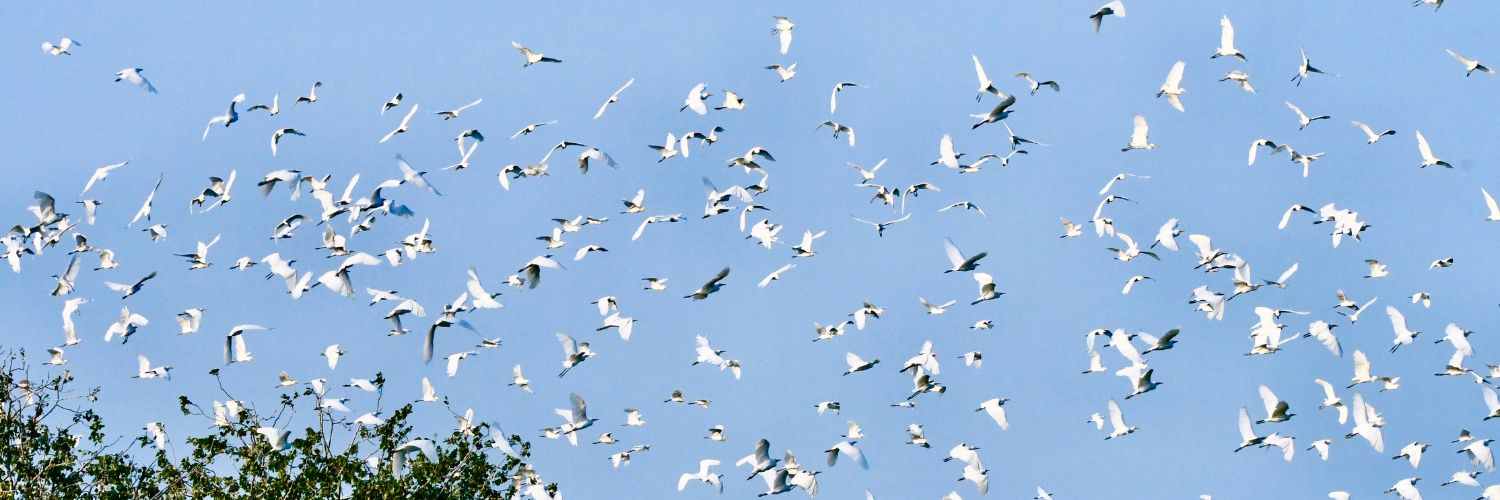
Nelle valli di Fossa c’è un luogo dove il verde si congiunge con zone d’acqua e dove le verdi chiome degli alberi in primavera si tingono di macchie bianche: sono aironi dal candido piumaggio che a centinaia si riproducono su pioppi. Siamo in Oasi Valdisole nel comune di Concordia sulla Secchia, il luogo in cui, dalla torretta d’osservazione, si può osservare una delle garzaie più importanti della provincia di Modena.
Ma cosa è una garzaia?
La garzaia è il luogo dove nidificano gli aironi che sono uccelli coloniali e che per riprodursi si riuniscono in gruppi più o meno numerosi; in Oasi Valdisole la garzaia conta circa 400 presenze suddivise tra aironi cenerini, garzette, nitticore, spatole, sgarze ciuffetto, ma la parte più consistente della colonia è data dagli aironi guardabuoi che sono circa 200.
E’ curiosa la storia dell’airone guardabuoi scientificamente classificato come Bubulcus ibis, dove bubulcus è colui che guida i buoi ed ibis, dal greco, un uccello: quindi alla lettera un ibis che guida i buoi; l’airone guardabuoi negli anni 70 veniva dato in Italia come accidentale e raro e lo si vedeva solamente in televisione, quando trasmettevano documentari dell’Africa, in tante scene rincorrere o farsi trasportare sulla schiena dai bufali. Per un motivo ancora sconosciuto, a partire dal sud della Spagna, in pochi anni ha colonizzato le nostre zone.
Ora li vediamo nei campi a caccia di cavallette, piccoli mammiferi o anfibi, dietro ai trattori che arano o rincorrere il getto d’acqua che innaffia i campi. Ebbene, su quest’isola hanno trovato il luogo ideale per riprodursi, lontano da ogni intrusione o disturbo.
E così sulla torre d’osservazione, assorti a osservare tanta bellezza e vita , il tempo scorre e quando il sole volge al tramonto lo spettacolo degli aironi che tornano alla garzaia è emozionante: centinaia di ali bianche che proiettano uno spettacolo inusuale per la nostra zona. Un Oasi ricca di esseri viventi dove la biodiversità è protagonista.
Rossella Casari, Tonino De Cristan, Antonio Gelati

In the Fossa valleys, there is a place where greenery meets water and where the green foliage of the trees is dotted with white spots in spring: these are herons with pure white plumage, hundreds of which breed in the poplar trees. We are in the Valdisole Oasis in the municipality of Concordia sulla Secchia, where, from the observation tower, you can see one of the most important heronries in the province of Modena
But what is a heronry?
A heronry is a place where herons, which are colonial birds, nest and gather in groups of varying sizes to reproduce. In the Valdisole Oasis, the heronry has about 400 birds, including gray herons, little egrets, night herons, spoonbills, and squacco herons, but the largest part of the colony is made up of cattle egrets, of which there are about 200.
The history of the cattle egret, scientifically classified as Bubulcus ibis, is curious. Bubulcus means “ox driver” and ibis, from the Greek, means “bird”: so literally, an ibis that drives oxen. In the 1970s, the cattle egret was considered accidental and rare in Italy and was only seen on television, when documentaries about Africa were broadcast, in many scenes chasing or being carried on the backs of buffaloes. For reasons still unknown, starting from southern Spain, it colonized our areas in just a few years.
Now we see them in the fields hunting grasshoppers, small mammals, or amphibians, behind tractors plowing or chasing the jet of water irrigating the fields. Well, on this island, they have found the ideal place to reproduce, far from any intrusion or disturbance.
And so, on the observation tower, absorbed in observing so much beauty and life, time passes and when the sun sets, the spectacle of the herons returning to their roost is exciting: hundreds of white wings projecting an unusual spectacle for our area. An oasis rich in living creatures where biodiversity is the protagonist.